Why You Need a York County Radon Expert for Your Home
Understanding Radon in York County
Living in York County, Pennsylvania, means dealing with a hidden hazard that many homeowners overlook: radon gas. This colorless, odorless radioactive gas comes from the natural breakdown of uranium in soil and rock. It seeps into homes through cracks in foundations, gaps around pipes, and other openings. The EPA has identified Pennsylvania as having one of the highest radon potentials in the country, and York County sits right in that high-risk zone. I have spent years working with local homeowners, and I can tell you that the numbers are sobering. Nearly two in five homes in this area test above the EPA's action level of 4 picocuries per liter. That is not a scare tactic; it is a fact from years of testing data.
What does that mean for you and your family? Breathing in radon gas over time increases your risk of lung cancer. The EPA estimates that radon causes about 21,000 lung cancer deaths each year in the United States. It is the second leading cause, after smoking. For nonsmokers, it is the number one cause. That is why taking action matters. But here is the tricky part: radon levels vary wildly from house to house, even between neighbors. You cannot guess your level based on what your neighbor got. The only way to know is to test.
When I first moved to York County, I bought a fixer-upper near the Codorus Creek. The basement had that musty smell, and the concrete floor had a few hairline cracks. I thought nothing of it. Then a friend who worked in environmental health suggested I test for radon. I picked up a short-term radon detector from the local hardware store and followed the instructions. Three days later, I sent it to a lab. The result came back at 7.8 pCi/L. That is nearly double the EPA action level. That experience made me realize how many people are living with levels like that without knowing. It is why I became a York County radon expert, helping others understand and fix the problem.
Testing: The First Step
Before you can fix a radon problem, you need to know what you are dealing with. Radon testing is simple and inexpensive. You can buy a do-it-yourself test kit at most hardware stores or online. The Health Department and County Extension Office also sell them. For a more thorough assessment, you can hire a certified professional like Dan Jenkins to do the testing. Professional testers use continuous radon monitors that give you a running average over 48 hours. That data is more reliable than a single charcoal canister, especially if you want to make decisions about mitigation.
Testing should be done in the lowest livable level of your home, usually the basement. You place the radon detector in a spot where it will not be disturbed, away from drafts, heat, and humidity. Keep windows and doors closed as much as possible during the test. The EPA recommends a long-term test of 90 days or more for the most accurate picture, but a short-term test is a good starting point. If your short-term result is above 4 pCi/L, do a follow-up test before you spend money on mitigation. One high reading does not always mean a chronic problem. Seasonal changes, weather, and even how you use your home can affect the numbers.
I have seen homeowners panic over a single high test, only to find that the next test came back below the action level. The opposite happens too. A low test in summer can give false reassurance because radon levels often rise in winter when homes are sealed tight. That is why I always recommend testing in cooler months if you can. If you are in the middle of a real estate transaction, you will need a short-term test done by a certified professional. Lenders and buyers usually require that before closing. Having a York County radon expert handle that testing adds credibility and avoids delays.
Radon Mitigation: How It Works
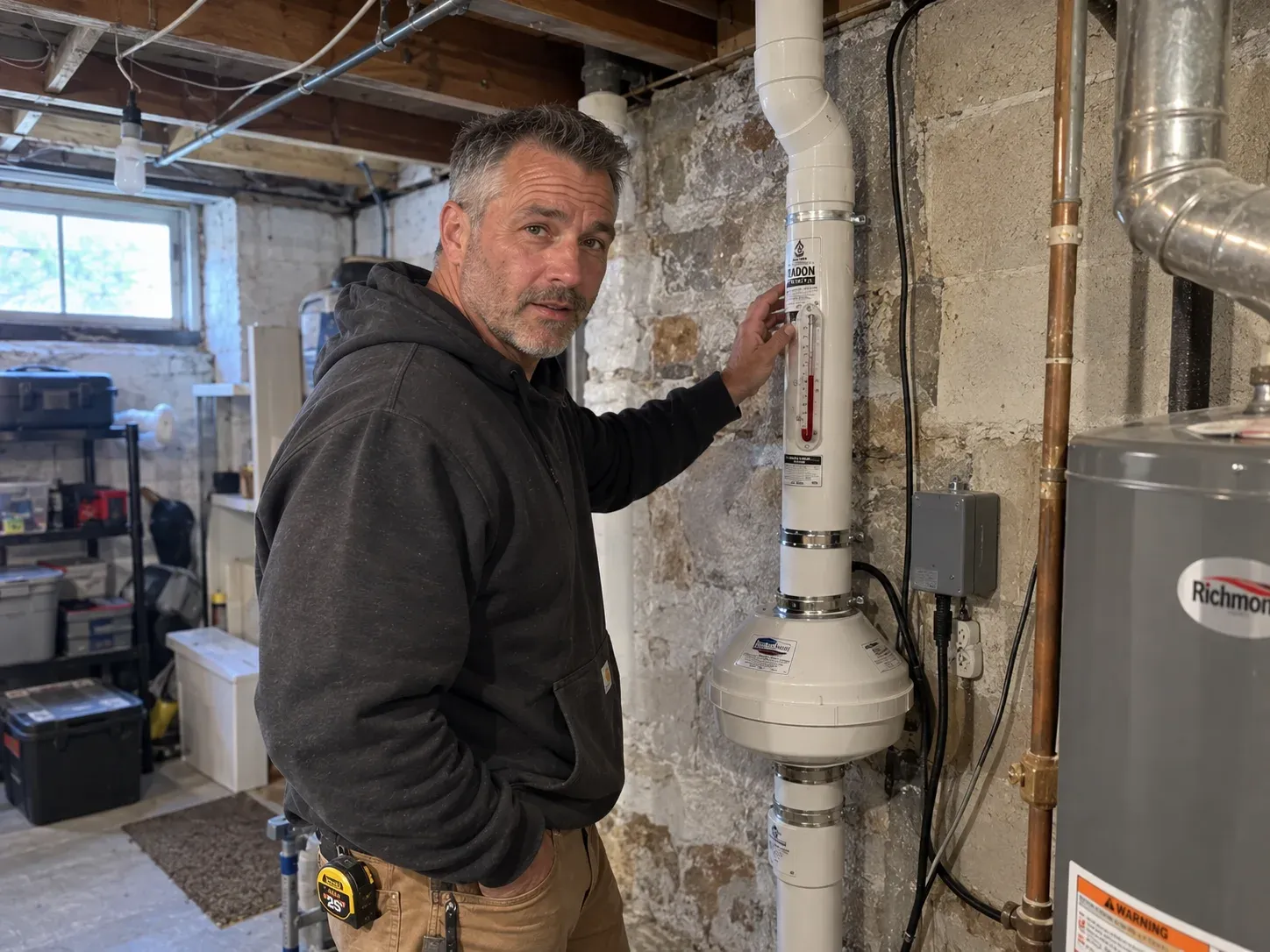
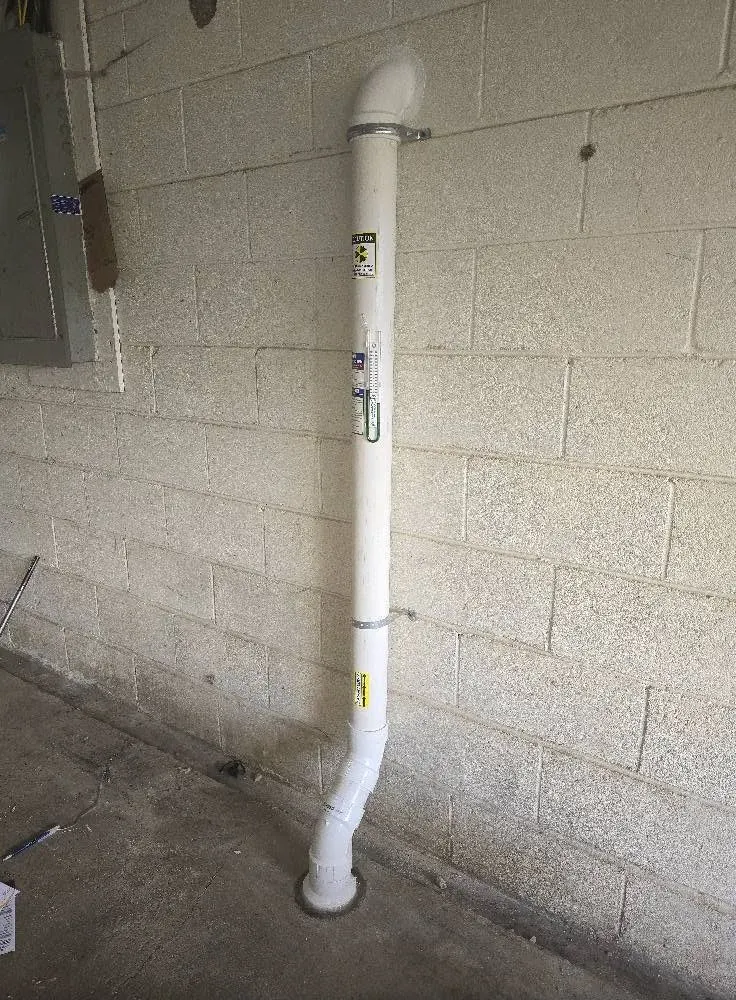
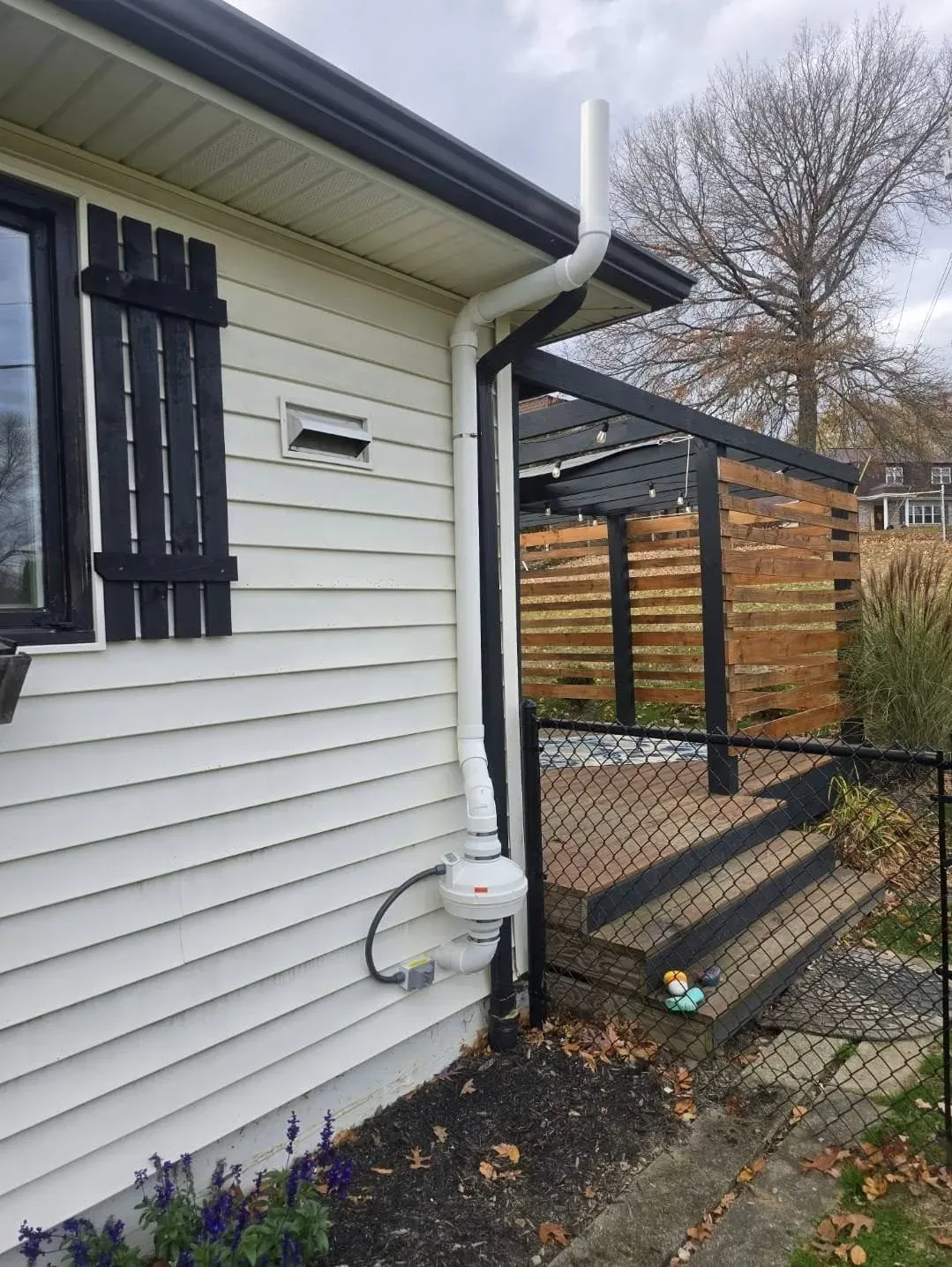
If your test comes back high, do not panic. Radon mitigation is a proven, effective way to reduce radon levels in your home. The most common method is sub-slab depressurization, also called soil suction. This system works by creating a vacuum under your basement floor. A radon fan pulls air from beneath the slab and vents it safely above the roofline, where the radon gas dilutes in the outdoor air. The fan runs continuously, and a manometer on the pipe shows you that the system is working properly. It is a simple, low-maintenance solution that can drop radon levels from double digits down to well below the EPA action level.
Installation is not a DIY job for most people. It requires drilling through the concrete slab, running PVC pipe, and sealing any openings. Crack sealing is a critical part of the process. Every gap in the basement floor or wall can let radon in, even with a mitigation system running. A professional like Dan Jenkins will go through your basement with a fine-tooth comb, sealing every crack and joint. He also checks for other entry points like sump pumps, floor drains, and utility penetrations. The goal is to create a tight seal so the system works efficiently.
Another method is block-wall depressurization for homes with hollow concrete block walls. That is less common in York County, but it comes up in older homes. The right approach depends on your home's construction. A local contractor who specializes in radon mitigation will know the local soil conditions and common building styles. That experience matters. A generic solution might work, but a targeted one works better and lasts longer.
After installation, the system should be tested again to confirm that radon levels have dropped. A good mitigation company will offer a mitigation system warranty on their work. Dan Jenkins provides a warranty that covers the fan and the installation for a set period. That gives you peace of mind. You should also test your home every two years or after any major renovation. Radon levels can change over time as the ground settles or as you make changes to your home's structure.
Choosing a Radon Professional
Not every general contractor is qualified to handle radon mitigation. You want someone who understands the physics of soil gas movement and has experience with the specific challenges of Pennsylvania homes. A York County radon expert like Dan Jenkins brings that local knowledge. He knows that homes in the southern part of the county near the Maryland border tend to have higher radon levels because of the geology there. He knows that homes built on hillsides often have crawl spaces that need special treatment. He has seen it all and can offer transparent pricing without hidden fees.
When you hire a professional, ask about their certifications. The Pennsylvania Department of Environmental Protection does not license radon mitigators, but many professionals hold national certifications from organizations like the National Radon Proficiency Program (NRPP) or the American Association of Radon Scientists and Technologists (AARST). Those certifications require ongoing education and adherence to standards. A good local contractor will be happy to show you their credentials.
I also recommend checking with the Better Business Bureau and reading online reviews. Look for comments about reliability, cleanliness, and communication. Radon mitigation involves working in your basement and possibly your yard. You want someone who respects your home and leaves it clean. Dan Jenkins has a reputation for being thorough and respectful, which goes a long way with homeowners who are already anxious about a health risk.
Maintaining Your System
Once you have a mitigation system in place, it requires very little upkeep. The radon fan is designed to run continuously for years, but it can fail. A failing fan is usually quiet, so you might not notice right away. That is why you need a manometer. This simple U-shaped tube filled with colored fluid shows you the pressure difference across the fan. If the fluid levels are even, the fan is not running. If they are uneven, the system is working. Check it once a month and after any major storm or power outage. If the manometer shows a problem, call your radon expert right away.
You should also reseal any new cracks that appear in your basement floor or walls. Concrete settles over time, and new gaps can open up. A tube of high-quality caulk and a caulk gun are cheap insurance. Keep an eye on the pipe that vents outside. Make sure the outlet is above the roofline and not blocked by leaves, snow, or bird nests. A blocked vent can cause the system to backdraft or lose effectiveness.
Indoor air quality is about more than just radon, but radon is a big piece of the puzzle. By testing and mitigating, you are protecting your family from a known carcinogen. You are also adding value to your home. In a real estate transaction, a home with a working mitigation system and test results showing low radon levels is more attractive to buyers. It is one less thing to negotiate over.
If you are reading this and have not tested your home yet, I encourage you to start. It takes a few days and costs less than a tank of gas. If your test comes back high, call a York County radon expert like Dan Jenkins. Do not wait. Radon does not cause immediate symptoms, but the damage it does to your lungs builds up over years. You cannot see it or smell it, but you can do something about it. That is the good news. With the right knowledge and the right help, you can make your home a safer place for your family.